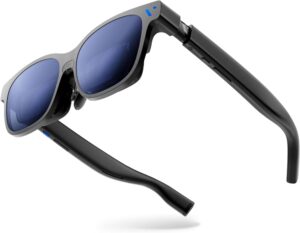
Affiliate Disclosure: As an Amazon Associate, we earn from qualifying purchases. Most links in this article are Amazon affiliate links. The Even Realities G2 is sold direct-only at evenrealities.com — we earn no commission on that product. Our recommendations are always independent and unbiased. Last Updated: May 2026
Smart glasses in 2026 are not one product category — they are three completely different types of wearable, and choosing the wrong type for your use case is the most common and most expensive mistake buyers make. The first type is camera and AI glasses: devices like the Meta Ray-Ban Gen 2 and Rokid AI Glasses Style that look like regular sunglasses, capture the world through a built-in camera and respond to voice commands via an AI assistant. You see the real world unobstructed — the glasses add intelligence and audio, not a display. The second type is HUD display glasses: the Even Realities G2 projects a discreet text overlay into your field of vision — notifications, navigation, real-time translation — without a camera and without speakers. You see real world plus a small floating display of information, invisibly. The third type is display extender glasses: the XREAL One Pro and Viture Beast replace or supplement your monitor with a large virtual screen visible only to you — up to 174 inches — powered by connecting via USB-C to a phone, laptop or gaming device. These are not camera glasses or AI assistants. They are personal cinema and productivity screens. Reading this distinction before buying is worth more than any spec comparison. The five products on this list were chosen because each one is the best available in its category in 2026. The ClarityPick Experts verified every camera spec, display measurement, battery claim, AI feature and price across all five.
⚠️ The 3 Types of Smart Glasses in 2026 — Read This Before Buying
Every product on this list is called “smart glasses.” None of them do the same thing. Choosing the wrong type is a $300–$650 mistake.
📷 Type 1 — Camera + AI Glasses
Look like regular sunglasses. Camera captures what you see. AI assistant responds to voice commands. Open-ear speakers for audio. No display — you see the real world only.
Products: Meta Ray-Ban Gen 2 · Rokid AI Glasses
💬 Type 2 — HUD Display Glasses
Look like regular glasses. Small text overlay projected into your vision. Notifications, navigation, translation displayed. No camera, no speakers — maximum privacy.
Product: Even Realities G2
🖥️ Type 3 — Display Extender Glasses
Connect via USB-C to phone/laptop/gaming device. Replace your monitor with a large virtual screen (up to 174″). Not AI glasses — personal cinema and productivity screens.
Products: XREAL One Pro · Viture Beast
Quick Comparison: 5 Best Smart Glasses 2026
| Rank |
Product |
Type |
Key Feature |
Price |
Best For |
| 🥇 #1 |
Meta Ray-Ban Gen 2 |
Camera + AI |
8hr battery, 3K/60fps, Llama 4 AI ⭐ |
$379 |
#1 selling AI glasses worldwide |
| 🥈 #2 |
Even Realities G2 |
HUD Display |
No camera, binocular HAO 2.0 display ⭐ |
$599+ |
Privacy-first HUD display, professionals |
| 🥉 #3 |
XREAL One Pro |
Display Extender |
57° FOV, 171″ Sony Micro-OLED, 120Hz ⭐ |
$649 |
Travel work, gaming, virtual screen |
| #4 |
Rokid AI Glasses Style |
Camera + AI |
38.5g, $299 ⭐, 89-language translation |
$299 ⭐ |
Best value AI glasses, travel |
| #5 |
Viture Beast |
Display Extender |
58° FOV, 174″, 1250 nits ⭐, Tom’s Guide Editor’s Choice |
$549 |
Best picture quality display glasses |
🏆 ClarityPick Editor’s Choice Awards — May 2026
🥇 Best Overall AI Glasses: Meta Ray-Ban Gen 2
Meta confirmed Ray-Ban Meta glasses are the #1 selling AI glasses in the world with millions of units sold. The Gen 2 update announced at Meta Connect 2025 doubled the battery life to 8 hours, upgraded the camera to 12MP with 3K Ultra HD video at 60fps and integrated the Llama 4 AI model for significantly improved Meta AI responses. Wired spent a month testing and confirmed the hardware upgrades justify the $80 price increase from Gen 1. Wareable called it “the best and most stylish smart glasses on the market” after the Gen 2 improvements. The charging case provides an additional 48 hours of power, and the glasses fast-charge to 50% in 20 minutes. Starting at $379 with over 150 frame and lens combinations.
🏆 Best Display Glasses: Viture Beast
Tom’s Guide awarded the Viture Beast their Editor’s Choice designation and stated: “Simply put, the Viture Beast are the best AR glasses that money can buy right now.” PCMag gave it 4.5/5 Outstanding and their Editors’ Choice award. Wired named it “Best Smart Glasses for Picture Quality.” The Beast uses Sony Micro-OLED displays rated at 1,250 nits — the brightest in its category — with a 58° field of view and a 174-inch virtual screen at 4 meters. The 9-level electrochromic dimming with Smart Auto Transparency is an industry first. Full retail launch was April 27, 2026. At $549 it is $100 less than the XREAL One Pro while matching or exceeding it on brightness and field of view.
🔒 Most Privacy-Conscious: Even Realities G2
Tom’s Guide reviewed the G2 and called it “the future of smart glasses I want.” Trusted Reviews confirmed: “Smart glasses that actually look like a regular pair of specs, especially when compared to the competition.” The G2’s deliberate omission of a camera eliminates the core privacy concern of every competitor on this list — there is literally no recording capability of any kind. The HAO 2.0 binocular display is 75% larger and sharper than the G1. Conversate uses contextual AI to follow conversations in real time and provide prompts and summaries. At $599 it is direct-only from evenrealities.com — no Amazon listing exists. Note that the G2 is made to order with a 6–12 week lead time.
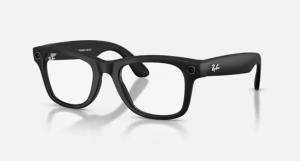
🥇 #1 Meta Ray-Ban Smart Glasses Gen 2 — Best AI Camera Glasses 2026
Meta Ray-Ban Smart Glasses (Gen 2)
Type: Camera + AI Glasses · 12MP ultra-wide camera ⭐ · 3K Ultra HD / 60fps video ⭐ · 8-hour battery ⭐ (up from ~4hr Gen 1) · 48hr additional from case · 20-min fast charge to 50% · Llama 4 AI (Meta AI) ⭐ · Open-ear speakers · Live translation (6 languages) · Livestreaming to Instagram/Facebook · Qualcomm Snapdragon AR1 Gen1 · 150+ frame/lens combinations · From $379
⚠️ Privacy Disclosure — Documented Concerns
The Meta Ray-Ban glasses have a small white LED that activates during recording. Privacy concerns include: documented misuse by individuals using the glasses to covertly film people in public without consent (BBC News, January 2026); a 2024 investigation showing hacked glasses could enable real-time facial recognition; EU regulatory scrutiny under GDPR with some AI features delayed or restricted in European markets; and an NOYB cease-and-desist letter to Meta regarding EU user data handling. 404 Media confirmed a cheap modification kit exists that disables the recording LED. If privacy — for you or others around you — is a priority, consider the Even Realities G2 which has no camera at all.
Best for: Anyone who wants genuinely useful AI assistance, hands-free photography and audio in a pair of glasses that look identical to regular Ray-Bans. The Meta Ray-Ban Gen 2 are the most mature, most reviewed and most purchased AI glasses on the market. If you want to capture life without reaching for your phone, ask an AI assistant questions hands-free, listen to music or take calls without earbuds, and get live translation — all in a frame that passes as normal sunglasses — this is the benchmark product. Best suited to social, travel, content creation and general daily carry use cases.
Meta confirmed the Ray-Ban Meta glasses are the #1 selling AI glasses in the world with millions of units sold. The Gen 2 announcement at Meta Connect 2025 addressed the most consistent weakness of the original — battery life — by nearly doubling it to 8 hours with typical use, up from approximately 4 hours on Gen 1. Android Central confirmed: “Meta estimates the battery life on Ray-Ban Meta Gen 2 to be nearly double that of the first-gen glasses.” The charging case adds 48 hours of charging on-the-go, making the total combined battery easily sufficient for multi-day travel without searching for an outlet.
The camera upgrade is equally significant. The 12MP ultra-wide camera now records at 3K Ultra HD resolution up to 60fps — more than double the pixel count of Gen 1 — with ultrawide HDR. Video recording extends to 3 minutes per clip, up from 60 seconds. The Llama 4 AI model powers Meta AI on the Gen 2, delivering significantly smarter responses to questions, real-time object identification via the camera and live translation in six languages including the newly added German and Portuguese. Livestreaming to Facebook and Instagram is supported with live community comment reading via AI. The glasses support over 150 frame and lens combinations across Wayfarer, Headliner, Skyler and other classic Ray-Ban silhouettes — and prescription lenses are available through the Ray-Ban website. Wired’s month-long review confirmed: “The hardware upgrades justify the $80 price bump. The new 12-MP camera captures photos and videos up to 3K resolution, with options for 60fps recording and slow-motion capture. Battery life jumps to 8 hours for mixed use.” Wareable called the Gen 2 “the best and most stylish smart glasses on the market.” The privacy concerns disclosed above are real and should be considered before purchasing.
Battery ⭐
8hrs + 48hr case
✓ Pros
- #1 selling AI glasses globally — most mature platform
- 8-hour battery — nearly double Gen 1
- 12MP camera / 3K Ultra HD at 60fps
- Llama 4 AI — most capable AI assistant on this list
- Live translation in 6 languages
- Livestreaming to Instagram and Facebook
- 150+ frame and lens combinations
- Prescription lenses available from Ray-Ban
✗ Cons
- Documented privacy concerns — covert recording possible
- No display — cannot show navigation or notifications visually
- Recording LED can be modified or missed by bystanders
- Requires Meta AI app on phone — dependent on phone connectivity
- EU users face some restricted AI features due to GDPR scrutiny
- $379 — more expensive than Rokid for same camera AI use case
💡 ClarityPick Verdict: The Meta Ray-Ban Gen 2 are the best AI camera glasses of 2026. The most mature platform, the most purchased, the best reviewed — with an 8-hour battery, 3K/60fps camera, Llama 4 AI and the widest range of frame styles of any smart glasses on the market. The privacy disclosure is important context and should factor into your decision. For camera-free privacy, choose the Even Realities G2.
Check Current Price on Amazon →
Price changes daily — click to see today’s price
🥈 #2 Even Realities G2 — Best HUD Display Smart Glasses 2026
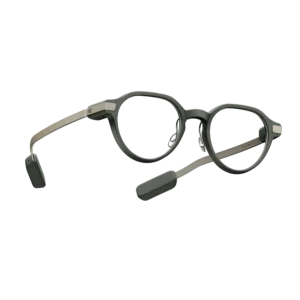
Even Realities G2 Smart Glasses
Type: HUD Display Glasses · Binocular HAO 2.0 microLED display ⭐ (75% larger than G1) · No camera ⭐ — zero recording capability · No speakers · Conversate AI real-time transcription and context ⭐ · 35-language real-time translation · Teleprompt · All-day battery + 7 charges in case · Titanium temples + magnesium frame · Prescription-ready · Tom’s Guide reviewed · $599 · Direct-only at evenrealities.com
📍 Where to Buy — Not on Amazon
The Even Realities G2 is available direct-only at evenrealities.com. It is not listed on Amazon. It is made to order with an estimated 6–12 week lead time for prescription versions. Non-prescription versions ship faster. ClarityPick earns no affiliate commission on this product. We include it because it is genuinely the best HUD display smart glasses available in 2026 — not for commercial reasons.
Best for: Professionals, public speakers, frequent travelers and anyone who wears prescription glasses and wants smart glasses that provide genuinely useful information — navigation, notifications, real-time translation, live transcription — in a pair of frames that look completely normal from the outside. The G2’s deliberate exclusion of a camera is a feature for buyers who are uncomfortable with the privacy implications of camera glasses and want smart functionality without recording capability of any kind. Also the right choice for glasses wearers who need prescription lens integration — the G2 is designed specifically for everyday eyeglass wearers.
The Even Realities G2 was released November 2025 and reviewed by Tom’s Guide as “the future of smart glasses I want.” The core distinction from every other product on this list is the deliberate omission of a camera. Tom’s Guide noted: “There are no cameras or speakers like the Ray-Ban Meta Gen 2 — but that’s the point. The Even G2 offers a less intrusive way of wearing this kind of smart tech, one that brings privacy for you and everyone else.” The display technology — HAO 2.0 (Holistic Adaptive Optics) — uses mini microLED projectors with gradient wavelengths in a binocular setup (both eyes, unlike the G1’s monocular display), producing a display 75% larger and significantly sharper than its predecessor. The display is monochrome green — text, not full-color video. Trusted Reviews described the G2 as having frames that “look like a regular pair of glasses — especially when compared to the competition.”
Conversate is the G2’s flagship AI feature: a real-time live captioning and context tool that follows spoken conversations and provides contextual suggestions, summaries and relevant information into your field of view without you needing to ask. This is specifically designed for meetings, presentations, negotiations and any situation where having a discreet information feed is valuable. The Teleprompt feature allows you to read a script in front of you without looking down at notes — Palmer Luckey (founder of Oculus) famously used Even G1 glasses to deliver a full TED talk with no notes from a teleprompter the audience could not see. Real-time translation supports 35 languages. Navigation provides turn-by-turn walking directions. The frame is titanium temples with magnesium — materials typically found in high-end optical frames, not consumer electronics. Compatible with the Even R1 smart ring ($249 separately) for ring-based scroll and navigation control. All-day battery with a case providing 7 additional charges. At $599 for the base model (non-prescription), prescription versions are priced higher. The 6–12 week lead time for made-to-order prescriptions is the primary practical limitation.
Display ⭐
Binocular HAO 2.0
Languages ⭐
35 translation
✓ Pros
- No camera — zero recording capability, maximum privacy
- Tom’s Guide: “the future of smart glasses I want”
- HAO 2.0 binocular display — 75% larger than G1
- Conversate AI — real-time conversation context and transcription
- 35-language real-time translation
- Teleprompt — discreet script reading in meetings or on stage
- Looks like regular glasses — most discreet design on this list
- Prescription-ready — designed for everyday eyeglass wearers
✗ Cons
- Not on Amazon — direct-only at evenrealities.com
- 6–12 week lead time for prescription orders
- $599 base — no camera or speakers for that price
- Monochrome display — green text only, not full color
- No speakers — cannot take calls through the glasses
- Navigation mapping less comprehensive than Google Maps (no transit)
- R1 smart ring for best navigation control sold separately at $249
💡 ClarityPick Verdict: The Even Realities G2 is the best HUD display smart glasses of 2026 and the only product on this list with zero recording capability. Tom’s Guide called it “the future of smart glasses I want.” For prescription wearers, privacy-conscious professionals and anyone who wants discreet real-time information without being a walking camera, the G2 is the most thoughtful smart glasses product available. Note the 6–12 week lead time and direct-only purchase at evenrealities.com.
View Even Realities G2 at EvenRealities.com →
Not on Amazon — sold direct only · 6–12 week lead time for prescription orders
🥉 #3 XREAL One Pro — Best Display Extender Smart Glasses 2026
XREAL One Pro
Type: Display Extender · 57° FOV ⭐ (industry-leading) · 0.55″ Sony Micro-OLED per eye · 171″ virtual screen · 120Hz refresh rate ⭐ · 3ms latency ⭐ · Native 3DoF spatial tracking (X1 chip) · Bose audio ⭐ · USB-C to phone/laptop/console · ΔE <3 colour calibration ⭐ · Prescription lens compatible · Tom’s Guide: “best AR glasses you can buy right now” · $649
ℹ️ Important — The XREAL One Pro and XREAL 1S Are Different Products
The XREAL One Pro ($649, 57° FOV, Sony Micro-OLED) and the XREAL 1S ($449, 52° FOV, 1200p) are two separate products. This article covers the One Pro — the flagship model. The 1S is a newer, more affordable alternative that offers higher resolution (1200p vs 1080p) but a slightly narrower field of view. If your Amazon link resolves to the 1S, confirm which model you are viewing before purchasing.
Best for: Frequent flyers, remote workers and gamers who want a large private virtual screen anywhere a USB-C device is available. The XREAL One Pro is not an AI glasses product — it is a display extender. Connect it to a MacBook, iPhone, iPad, Steam Deck or ROG Ally and it replaces your monitor with a 171-inch virtual screen only you can see. At 57° field of view it offers the widest virtual screen experience of any display glasses on the market, confirmed by Tom’s Guide as “the best AR glasses you can buy right now.” Ideal for airline travel, working in public, private gaming sessions and productivity without a monitor.
Tom’s Guide tested the XREAL One Pro head-to-head against all major competitors and concluded it is “the best AR glasses you can buy right now,” specifically highlighting “the expanded 57-degree field of view — an incredible experience to have when on a long-haul flight.” Windows Central called it “the absolute best, creating the future” and confirmed the 57° FOV gives “a larger ‘simulated’ screen of up to 171 inches with less blurriness and clipping at the edges.” The display technology is 0.55-inch Sony Micro-OLED panels — smaller physically than the XREAL One’s panels but with higher optical quality. The X1 spatial computing chip provides native 3DoF tracking, meaning the virtual screen remains anchored in space even as you move your head — it doesn’t wobble or drift. Each unit undergoes individual colour calibration before shipping achieving ΔE <3 colour accuracy — a professional-grade colour standard. The 120Hz refresh rate at 3ms latency makes the XREAL One Pro usable for gaming in addition to productivity and media consumption. Bose-tuned audio is built into the temples. IPD adjustment covers 57mm to 75mm, accommodating approximately 95% of users. The optional XREAL Eye add-on ($99) adds 6DoF spatial tracking and point-of-view video recording for spatial computing applications. Prescription lenses are compatible via insert frames. The XREAL 1S (a newer, more affordable model at $449) offers 52° FOV and higher 1200p resolution — a valid alternative for buyers where the lower price matters more than the wider FOV of the One Pro.
✓ Pros
- Tom’s Guide: “best AR glasses you can buy right now”
- 57° FOV — industry-leading field of view for display glasses
- Sony Micro-OLED — premium display with ΔE <3 colour accuracy
- 120Hz / 3ms — suitable for gaming as well as productivity
- Bose-tuned audio built in
- Native 3DoF spatial tracking via X1 chip — stable anchored screen
- Works with MacBook, iPhone, iPad, Steam Deck, ROG Ally
- XREAL Eye add-on for 6DoF available at $99
✗ Cons
- $649 — most expensive on this list
- Not AI glasses — no voice assistant, no camera, no translation
- Requires a USB-C device to function — not standalone
- Current resolution 1080p — XREAL 1S offers 1200p at lower price
- Not suitable for productivity text work — still not sharp enough for extended reading
- No built-in battery — draws power from connected device
💡 ClarityPick Verdict: The XREAL One Pro is the best display extender glasses of 2026. Tom’s Guide named it “the best AR glasses you can buy right now” for its 57° FOV, Sony Micro-OLED display, 120Hz/3ms gaming-grade performance and Bose audio. The right choice for anyone who wants a large private virtual screen on a flight, in a coffee shop or at a desk without a monitor. At $649 it is the most expensive product on this list — the XREAL 1S at $449 is a valid alternative with higher resolution but narrower FOV.
Check Current Price on Amazon →
Price changes daily — click to see today’s price
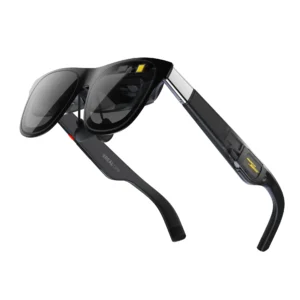
#4 Rokid AI Glasses Style — Best Budget AI Camera Glasses 2026
Rokid AI Glasses Style
Type: Camera + AI Glasses · 38.5g ⭐ (lightest AI glasses) · 12MP Sony IMX681 camera ⭐ · 89-language translation ⭐ (online) + 6-language offline · ChatGPT + Gemini AI support ⭐ · 12hr battery (24hr standby) ⭐ · Open-ear audio · Gesture + voice + touch control · TR90 + titanium alloy frame · Prescription to ±15.00D · No display · From $299 ⭐
Best for: Travelers and multilingual users who want AI camera glasses with broader translation support than Meta (89 languages vs 6) at $80 less than the Ray-Ban Gen 2. The Rokid AI Glasses Style is the lightest full-featured AI glasses on the market at 38.5g — lighter than many traditional optical frames — and has the most comprehensive translation capability of any product on this list. Also the best choice for buyers who want an open AI ecosystem — Rokid supports ChatGPT and Gemini simultaneously rather than locking you into a single AI platform like Meta’s Llama.
Rokid AI Glasses Style launched globally at CES 2026 in January and became immediately available on Amazon US and Rokid’s website at $299. At 38.5 grams it is among the lightest full-featured AI glasses on the market — significantly lighter than Ray-Ban Meta which uses heavier optical components. The 12MP Sony IMX681 sensor captures 3K video and 12MP photos. Battery life of 12 hours of active use with 24-hour standby — longer than the Meta Ray-Ban Gen 2’s 8 hours. The open AI ecosystem is Rokid’s most significant architectural distinction: rather than a proprietary AI model, Rokid supports ChatGPT, Gemini and multiple other AI engines simultaneously, allowing the most capable model to respond to any given query. Real-time translation covers 89 languages online and 6 languages offline including English, Chinese, Japanese, French, German and Spanish — making it the most comprehensive translation option on this list by a wide margin.
Control is multimodal: voice commands (“Hey Rokid”), touch controls on the frame and gesture recognition — including nod to answer calls and shake to hang up. The dual-chip architecture (NXP RT600 + Qualcomm AR1) was confirmed by Rokid as a world-first for AI glasses at CES 2026. TR90 polymer frame with titanium alloy hinges provides flexible durability that returns to shape after bending. Prescription support covers plano to ±15.00D — one of the widest prescription ranges of any smart glasses product, including myopia, astigmatism, presbyopia and progressive lenses. Dynamic photochromic lenses are available, transitioning from clear to tinted in approximately 25 seconds. NexraGear’s independent pricing analysis confirmed: “Rokid offers lighter weight (38.5g), longer recording time (10 min vs 3 min) and built-in ChatGPT 5.2 at a lower price” versus the Ray-Ban Meta Gen 2. The honest limitation is that Rokid does not have Meta’s brand recognition or ecosystem depth — the Meta AI platform is more capable and better integrated with social media. Rokid also has no display — like the Meta Ray-Ban, it is camera and audio only with no visual information overlay.
Languages ⭐
89 translation
✓ Pros
- Lightest AI glasses on this list — 38.5g
- 89-language translation — most of any product here
- ChatGPT + Gemini — open AI ecosystem, not locked to one model
- 12-hour battery — longer than Meta Ray-Ban Gen 2
- $299 — $80 cheaper than Meta Ray-Ban Gen 2
- Prescription support to ±15.00D — widest range on this list
- 12MP Sony IMX681 camera
- Dual-chip architecture confirmed world-first at CES 2026
✗ Cons
- No display — camera and audio only, no visual information overlay
- Less brand recognition than Meta — fewer third-party guides and tutorials
- Camera privacy concerns apply — same as Meta (recording indicator LED)
- No social media livestreaming — Meta has deeper Instagram/Facebook integration
- Newer platform — less mature than Meta’s multi-year ecosystem
- No Dolby Atmos or premium audio partnership
💡 ClarityPick Verdict: The Rokid AI Glasses Style is the best value AI camera glasses of 2026. At $299 — $80 less than Meta Ray-Ban Gen 2 — it offers 89-language translation (vs Meta’s 6), a longer 12-hour battery, ChatGPT + Gemini AI support and the lightest weight on this list at 38.5g. For frequent travelers, multilingual users and buyers who want AI glasses without the Meta ecosystem, Rokid is the compelling alternative.
Check Current Price on Amazon →
Price changes daily — click to see today’s price
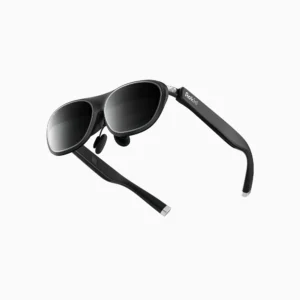
#5 Viture Beast — Best Picture Quality Display Glasses 2026
Viture Beast XR Glasses
Type: Display Extender · 58° FOV ⭐ (widest on this list) · Sony Micro-OLED · 174″ virtual screen ⭐ · 1200p resolution · 1,250 nits ⭐ (brightest on this list) · 9-level electrochromic dimming with Smart Auto Transparency ⭐ · VisionPair 3DoF tracking · HARMAN audio ⭐ · Aluminium-magnesium frame · USB-C to phone/laptop/console · Tom’s Guide Editor’s Choice ⭐ · PCMag Editors’ Choice ⭐ · Wired “Best for Picture Quality” ⭐ · $549
Best for: Anyone who wants the absolute best picture quality in a display extender glasses at $100 less than the XREAL One Pro. The Viture Beast holds three independent editor’s choice awards — Tom’s Guide, PCMag and Wired — for its combination of 58° FOV (the widest of any consumer XR glasses), 1,250 nits brightness (the highest on this list), 9-level electrochromic dimming with Smart Auto Transparency and HARMAN-tuned audio. At $549 it is a direct competitor to the XREAL One Pro — choose based on which specification matters more to you: wider FOV and higher brightness (Viture Beast) versus lower latency, Bose audio and higher colour accuracy (XREAL One Pro).
The Viture Beast launched for broad retail availability on April 27, 2026 — the most recently launched product on this list. Tom’s Guide awarded it their Editor’s Choice and stated: “Simply put, the Viture Beast are the best AR glasses that money can buy right now.” PCMag gave it 4.5/5 Outstanding and their Editors’ Choice award. Wired named it “Best Smart Glasses for Picture Quality.” The 58° field of view is the widest of any consumer XR glasses available today, confirmed by Gaming Nexus who tested it against the XREAL One Pro directly: “Their competitor in the XREAL One Pro, they are 1 degree more as the One Pro’s stated FOV is 57 degrees.” Road to VR confirmed the 174-inch virtual screen at 4 meters and 1,250-nit brightness rating from Sony Micro-OLED panels.
The 9-level electrochromic dimming with Smart Auto Transparency is the industry’s first implementation of this capability according to Viture — allowing automatic adjustment to ambient lighting conditions across 9 discrete levels, making the Beast usable in direct sunlight where most display glasses wash out completely. Gaming Nexus’s independent test confirmed: “I was able to stand in bright sunlight with the dimming at its darkest and still see the picture pretty clearly.” The HARMAN-tuned audio system provides premium sound from the temples. VisionPair 3DoF tracking keeps the virtual screen anchored in space during head movement. The frame is aluminium-magnesium construction — a premium material typically found in aerospace and high-end optical applications. At $549 the Beast is $100 less than the XREAL One Pro with a wider FOV and higher brightness, though at the time of Gaming Nexus’s April 2026 review the full 1200p resolution required a firmware update that had just shipped — confirm current firmware status before purchasing.
✓ Pros
- Tom’s Guide Editor’s Choice + PCMag Editors’ Choice + Wired “Best Picture Quality”
- 58° FOV — widest of any consumer XR glasses
- 1,250 nits — brightest display on this list
- 174″ virtual screen — largest on this list
- 9-level electrochromic dimming — usable in direct sunlight
- HARMAN-tuned audio system
- $549 — $100 less than XREAL One Pro
- Aluminium-magnesium premium frame construction
✗ Cons
- Full 1200p resolution required firmware update at launch — confirm current status
- 88g — heavier than XREAL One Pro
- Not AI glasses — no voice assistant, no camera, no translation
- Requires USB-C device — not standalone
- Latency not independently confirmed vs XREAL One Pro’s 3ms
- Newer product — less long-term reliability data than XREAL
💡 ClarityPick Verdict: The Viture Beast is the best picture quality display glasses of 2026. Tom’s Guide Editor’s Choice, PCMag Editors’ Choice and Wired’s “Best for Picture Quality” — the widest FOV (58°), brightest display (1,250 nits), largest virtual screen (174″) and industry-first 9-level electrochromic dimming. At $549 it is $100 less than the XREAL One Pro. Choose the Beast for brightness and FOV; choose the XREAL One Pro for lower latency, Bose audio and colour accuracy.
Check Current Price on Amazon →
Price changes daily — click to see today’s price
Smart Glasses Buyer’s Guide 2026
🎯 Choose the Meta Ray-Ban Gen 2 If…
- You want the most polished, most purchased AI camera glasses with the deepest social media integration — livestreaming to Instagram and Facebook, Meta AI with Llama 4, and the widest range of frame and lens style options of any smart glasses on the market
- 8-hour battery life matters — significantly more than the Gen 1 and sufficient for a full day of mixed use including music, AI queries and photography
- You have reviewed the privacy disclosure and are comfortable with the recording implications for yourself and those around you
🎯 Choose the Even Realities G2 If…
- You wear prescription glasses and want smart glasses that integrate with your prescription and look completely normal — the G2 was designed specifically for everyday eyeglass wearers
- Privacy is non-negotiable — the G2 has zero recording capability and no camera of any kind, eliminating the core concern of every other AI glasses product
- You present publicly, speak professionally or are in frequent multilingual meetings and want real-time teleprompter, Conversate AI transcription and 35-language translation visible only to you
- You are comfortable with the 6–12 week lead time for made-to-order prescription versions and the direct-only purchase at evenrealities.com
🎯 Choose the XREAL One Pro If…
- You travel frequently and want a large private virtual screen on flights, trains or in public spaces — a 171-inch screen visible only to you from any USB-C device
- Gaming performance matters alongside media consumption — the 120Hz/3ms spec is suitable for gaming in addition to watching and working
- Colour accuracy and audio quality matter — ΔE <3 individual colour calibration and Bose-tuned audio are both standout specs versus the Viture Beast
🎯 Choose the Rokid AI Glasses Style If…
- You travel internationally frequently and need AI glasses with 89-language translation — 83 more languages than the Meta Ray-Ban Gen 2’s 6
- Budget is a primary constraint — $299 is $80 less than the Meta Ray-Ban Gen 2 for a product with a longer battery and more translation languages
- You want AI glasses that support multiple AI models simultaneously — ChatGPT and Gemini both supported versus Meta’s proprietary Llama platform
🎯 Choose the Viture Beast If…
- Picture quality is the primary criterion — Tom’s Guide, PCMag and Wired all independently named it best for picture quality or awarded it Editor’s Choice
- Outdoor use matters — the 9-level electrochromic dimming with Smart Auto Transparency makes the Beast usable in direct sunlight where most display glasses fail
- The $100 saving versus the XREAL One Pro is meaningful — 58° FOV and 1,250 nits at $549 versus XREAL’s 57° and lower brightness at $649
📋 Smart Glasses Buying Checklist 2026
- Decide your type first: Camera AI glasses (Meta, Rokid), HUD display glasses (Even Realities G2) or display extender glasses (XREAL, Viture) are fundamentally different products serving different needs. Buying the wrong type is the most common expensive mistake in this category
- Camera glasses require a privacy decision: Any smart glasses with a camera — including the Meta Ray-Ban Gen 2 and Rokid — raise legitimate privacy questions for you and for the people around you. The recording indicator LED is small and frequently missed. This is not a reason to avoid camera glasses but it is an honest consideration before purchase
- Display extender glasses require a USB-C device: The XREAL One Pro and Viture Beast do not function standalone. They connect via USB-C to a phone, laptop or gaming console. Check your devices are USB-C with DisplayPort support before buying. iPhones 15 and 16 are compatible. iPhones 14 and earlier are not (require a Lightning-to-USB-C adapter dock)
- HUD display glasses are not the same as AR: The Even Realities G2’s display is a green monochrome text overlay — not full-colour augmented reality. It is excellent for text information (navigation, notifications, translation) but cannot display images, video or full-color content. Understanding this avoids disappointed expectations
- Prescription compatibility varies significantly: Rokid supports the widest prescription range (±15.00D). Meta Ray-Ban supports prescription through the Ray-Ban website with a narrower range. Even Realities G2 is specifically designed for prescription wearers. XREAL and Viture support prescription inserts but with limitations. If you wear glasses daily, verify prescription compatibility before purchasing
Frequently Asked Questions
What are the best smart glasses in 2026?
The best smart glasses in 2026 depend entirely on what type you need. For AI camera glasses: the Meta Ray-Ban Gen 2 ($379) is the #1 selling AI glasses worldwide with 8-hour battery and 3K/60fps camera, and the Rokid AI Glasses Style ($299) offers 89-language translation at a lower price. For HUD display glasses: the Even Realities G2 ($599) is the only camera-free privacy-first smart glasses with a binocular text display — direct only at evenrealities.com. For display extender glasses: the XREAL One Pro ($649) is Tom’s Guide’s “best AR glasses you can buy” with 57° FOV and 120Hz, and the Viture Beast ($549) is Tom’s Guide Editor’s Choice for its 58° FOV, 1,250-nit brightness and picture quality.
Meta Ray-Ban Gen 2 vs Rokid AI Glasses — which is better?
They target the same use case — camera AI glasses — but with different strengths. Meta Ray-Ban Gen 2 ($379) wins on AI platform maturity (Llama 4), social media integration (livestreaming to Instagram/Facebook), brand recognition and frame variety (150+ combinations). Rokid AI Glasses Style ($299) wins on price ($80 cheaper), translation languages (89 vs 6), battery life (12hr vs 8hr) and AI openness (ChatGPT + Gemini vs Meta only). For most buyers in a Meta/Instagram ecosystem, the Ray-Ban Gen 2 is the better integrated choice. For frequent international travelers who need broad translation support, Rokid provides more value.
XREAL One Pro vs Viture Beast — which should I buy?
Both are display extender glasses connecting via USB-C. The Viture Beast ($549) wins on: FOV (58° vs 57°), brightness (1,250 nits), screen size (174″ vs 171″), outdoor usability (9-level electrochromic dimming) and price ($100 cheaper). The XREAL One Pro ($649) wins on: confirmed latency (3ms), Bose-tuned audio, ΔE <3 colour accuracy from individual calibration and a more established ecosystem with longer reliability track record. Tom’s Guide awarded Editor’s Choice to both in their respective review periods. Choose the Viture Beast if brightness, FOV and price matter most. Choose the XREAL One Pro if audio quality, colour accuracy and proven low latency matter most.
Do smart glasses work with prescription lenses?
Most smart glasses on this list support prescription lenses but with different approaches and ranges. Rokid AI Glasses Style supports the widest range — plano to ±15.00D — including myopia, astigmatism, presbyopia and progressive lenses through their global online prescription platform. Meta Ray-Ban Gen 2 supports prescription lenses through the Ray-Ban website in supported regions. Even Realities G2 is specifically designed for prescription wearers and was built from the ground up for daily eyeglass use. XREAL One Pro and Viture Beast support prescription through separate insert frames with some limitations on extreme prescriptions. Always verify your specific prescription is supported before purchasing.
Are smart glasses with cameras legal to wear in public?
In most countries, wearing camera glasses in public spaces where photography is generally permitted is legal — the same rules that apply to phone cameras typically apply. The key legal and ethical considerations are: recording in private spaces (bathrooms, changing rooms, private property) is generally illegal everywhere; several EU countries have raised regulatory questions about the Meta Ray-Ban glasses specifically under GDPR, with some AI features restricted in European markets; and some workplaces, government buildings and private venues prohibit recording devices including camera glasses. The recording indicator LED on camera glasses does not eliminate the ethical responsibility to inform people around you when you are recording. If legal certainty or ethical comfort is important, choose the Even Realities G2 which has no camera of any kind.
🏆 Final Verdict — 5 Best Smart Glasses 2026
Three product categories. Five products. Match the type to your use case first — then choose within that type.
Best AI Camera Glasses: Meta Ray-Ban Gen 2 — #1 selling globally, 8hr battery, 3K/60fps, Llama 4 AI (see privacy note)
$379
Best HUD Display: Even Realities G2 — no camera, binocular HAO 2.0 display, Conversate AI, Tom’s Guide pick (direct only)
$599+
Best Display Extender: XREAL One Pro — 57° FOV, 171″, 120Hz/3ms, Bose audio, Tom’s Guide “best AR glasses you can buy”
$649
Best Budget AI Glasses: Rokid AI Glasses Style — 38.5g, 89 languages, ChatGPT+Gemini, 12hr battery, $80 less than Meta
$299
Best Picture Quality: Viture Beast — 58° FOV, 174″, 1,250 nits, 9-level dimming, Tom’s Guide + PCMag + Wired Editor’s Choice
$549
Affiliate Disclosure: As an Amazon Associate, we earn from qualifying purchases. Most links in this article are Amazon affiliate links at no extra cost to you. The Even Realities G2 link goes to evenrealities.com — we earn no commission on that product. Our recommendations are always independent and unbiased. Last Updated: May 2026