Affiliate Disclosure: As an Amazon Associate, we earn from qualifying purchases. This review contains affiliate links at no extra cost to you. Our recommendations are always independent and unbiased. Last Updated: May 2026
The drone camera market in 2026 spans everything from sub-$200 beginner models to professional-grade rigs used by filmmakers and commercial operators. The five drones on this list were chosen to cover every type of buyer: DJI Mini 4 Pro is the best all-rounder under 249g — the first Mini-series drone with omnidirectional obstacle sensing, 4K/60fps HDR video, and ActiveTrack 360°, all under the FAA’s registration threshold for recreational use; DJI Air 3 is the step-up dual-camera model for enthusiasts who want a 3x telephoto lens, 46-minute flight time, and the same omnidirectional sensing in a larger platform; Autel EVO Lite+ is the best non-DJI professional option with a 1-inch CMOS sensor, variable f/2.8–f/11 aperture, 6K video, and 40-minute flight time for serious aerial photographers who prefer operating outside DJI’s ecosystem; Holy Stone HS720R is the most accessible option under $300 with a 3-axis mechanical gimbal, GPS, and 4K/30fps for first-time buyers; and Potensic Atom SE is the best ultra-budget option under 249g with a Sony 12MP sensor, GPS, 4K/30fps, and 31-minute flight time for beginners who want to stay under the registration threshold without spending DJI prices. The ClarityPick Experts verified every spec, sensor size, flight time, weight, and obstacle avoidance claim across all 5.
🔬 Drone Buying Guide — What Actually Matters in 2026
Three things determine which drone is right for you: the 249g weight threshold, sensor size, and obstacle avoidance type. Understanding each one prevents buying the wrong drone.
⚖️ The 249g Weight Threshold — Why It Matters
In the US, drones under 250g (0.55 lbs) do not need to be registered with the FAA for purely recreational use and face fewer airspace restrictions. DJI Mini 4 Pro (249g) and Potensic Atom SE (under 249g) sit under this threshold. DJI Air 3 (720g), Autel EVO Lite+ (835g), and Holy Stone HS720R (389g) all exceed it and require registration in the US. Always check current FAA regulations and local laws before flying — rules change and vary by region.
📷 Sensor Size — The Biggest Image Quality Factor
Sensor size determines low-light performance, dynamic range, and overall image quality more than megapixel count. The Autel EVO Lite+ has the largest sensor on this list at 1 inch — the same size as many dedicated cameras. DJI Mini 4 Pro and DJI Air 3 both use 1/1.3-inch sensors, which are excellent for their class. Holy Stone HS720R and Potensic Atom SE use 1/3-inch Sony sensors — good for beginners, noticeably limited in low light versus larger sensors.
🛡️ Obstacle Avoidance — Omnidirectional vs. 3-Way vs. None
DJI Mini 4 Pro and DJI Air 3 both have omnidirectional obstacle sensing — they detect obstacles in all directions simultaneously and can automatically navigate around them using APAS 5.0. The Autel EVO Lite+ has 3-way obstacle detection (forward, backward, downward) — it will slow and stop but does not autonomously navigate around obstacles. Holy Stone HS720R has GPS and return-to-home but no obstacle detection. Potensic Atom SE has no obstacle avoidance at all — requires full manual awareness from the pilot.
⏱️ Flight Time — Advertised vs. Real World
Advertised flight times are measured under optimal windless lab conditions. Real-world flight times are consistently shorter — typically 20–30% less in normal flying conditions with wind, active camera use, and obstacle avoidance systems running. DJI Air 3 leads this list at 46 minutes advertised (real-world typically 35–40 min). DJI Mini 4 Pro: 34 min standard battery, 45 min with the optional Plus battery. Autel EVO Lite+: 40 min advertised, real-world 30–35 min. Holy Stone HS720R: 26 min. Potensic Atom SE: 31 min.
Bottom line: If you want to avoid FAA registration for recreational use, stay under 249g — DJI Mini 4 Pro or Potensic Atom SE. If image quality and flight time are the priority, DJI Air 3 or Autel EVO Lite+ deliver professional results. If budget is the primary constraint, Holy Stone HS720R or Potensic Atom SE offer solid entry-level capability. Always check FAA regulations and local airspace rules before flying regardless of weight.
Quick Comparison: 5 Best Drone Cameras 2026
| Rank |
Drone |
Sensor |
Max Video |
Flight Time |
Weight |
Best For |
| 🥇 #1 |
DJI Mini 4 Pro |
1/1.3″ CMOS |
4K/60fps HDR |
34–45 min |
249g ⭐ |
Best overall, sub-249g, omni obstacle sensing |
| 🥈 #2 |
DJI Air 3 |
Dual 1/1.3″ CMOS |
4K/60fps HDR ⭐ |
46 min ⭐ |
720g |
Best dual-camera, longest flight time |
| 🥉 #3 |
Autel EVO Lite+ |
1″ CMOS ⭐ |
6K/30fps |
40 min |
835g |
Best non-DJI, largest sensor, variable aperture |
| #4 |
Holy Stone HS720R |
1/3″ Sony |
4K/30fps |
26 min |
389g |
Best beginner under $300, 3-axis gimbal |
| #5 |
Potensic Atom SE |
1/3″ Sony |
4K/30fps |
31 min |
Under 249g ⭐ |
Best ultra-budget sub-249g with GPS |
🏆 ClarityPick Editor’s Choice Awards — May 2026
🥇 Best Overall: DJI Mini 4 Pro
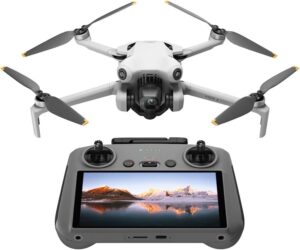
The DJI Mini 4 Pro is the most significant upgrade in DJI’s Mini series history. It is the first Mini-series drone to feature omnidirectional obstacle sensing — detecting obstacles in all directions simultaneously — a capability previously only found on DJI’s larger, more expensive drones. At under 249g, it avoids FAA registration requirements for recreational use in the US while delivering 4K/60fps HDR video, a 1/1.3-inch CMOS sensor with 48MP stills, 10-bit D-Log M color profiles, and a 20km transmission range via O4. ActiveTrack 360° enables the drone to maintain a lock on a moving subject from any angle. TechRadar, Digital Camera World, and multiple independent reviewers confirm it as the best drone under 250g currently available. The standard battery delivers 34 minutes; the optional Intelligent Flight Battery Plus extends this to 45 minutes (note: the Plus battery pushes weight above 249g, which may affect registration requirements depending on use case — check FAA guidelines).
🏆 Best Dual-Camera: DJI Air 3
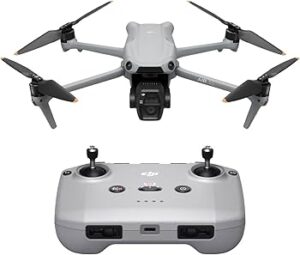
The DJI Air 3 is the only drone on this list with two primary cameras at the same sensor size — a 1/1.3-inch 24mm wide-angle and a 1/1.3-inch 70mm medium telephoto, both shooting 48MP stills and 4K/60fps HDR video. This means the telephoto shots are not a crop of the wide sensor — they have their own full 1/1.3-inch sensor with its own optical image quality. The Air 3 delivers 46 minutes of maximum flight time — the longest on this list — and uses the same O4 transmission system as the Mini 4 Pro with a 20km range. APAS 5.0 omnidirectional obstacle sensing runs on all six sensing directions simultaneously. At 720g, it requires FAA registration for recreational use and sits above the regulatory threshold — but for buyers who want the best footage quality and longest flight time without stepping up to a Mavic, the Air 3 is the definitive choice.
🏆 Best Non-DJI Professional: Autel EVO Lite+
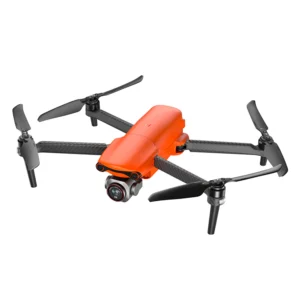
The Autel EVO Lite+ carries the largest image sensor on this list — a 1-inch CMOS with a 20MP resolution, the same sensor size class as many dedicated cameras. The variable aperture from f/2.8 to f/11 allows manual control over exposure and depth of field — a feature absent on every other drone on this list, which all use fixed apertures. TechRadar confirmed 6K/30fps video capability and 40-minute maximum flight time in their review, noting it as “an amazingly versatile piece of flying camera equipment.” The Moonlight Algorithm is Autel’s proprietary low-light processing system that allows the 1-inch sensor to shoot cleanly at high ISOs. For buyers who need maximum image quality and want to operate outside DJI’s ecosystem — whether for airspace freedom reasons or ecosystem preference — the EVO Lite+ is the professional-grade option on this list.
🥇 #1 DJI Mini 4 Pro — Best Overall Drone Camera 2026
DJI Mini 4 Pro
1/1.3″ CMOS · 48MP stills · 4K/60fps HDR · 10-bit D-Log M/HLG · Under 249g ⭐ · 34 min (standard) / 45 min (Plus battery) · 20km O4 transmission · Omnidirectional obstacle sensing ⭐ · APAS 5.0 · ActiveTrack 360° · True vertical shooting · RAW stills · ~$759–$959
⚖️ FAA Registration Note
The DJI Mini 4 Pro with the standard Intelligent Flight Battery weighs under 249g and does not require FAA registration for purely recreational use in the US. Using the Intelligent Flight Battery Plus pushes the aircraft weight above 249g, which may require registration depending on your use case. The Plus battery is not sold in Europe. Always check current FAA guidelines and local regulations before flying — rules vary by region and use case (recreational vs. commercial).
Best for: Buyers who want the best possible drone under 249g — combining professional camera capabilities (4K/60fps HDR, 10-bit D-Log M, 48MP RAW stills) with the first omnidirectional obstacle sensing ever in DJI’s Mini series, all in a sub-registration-threshold package. The right choice for travel photographers, content creators, and recreational pilots who want a genuinely professional result without exceeding the 249g limit.
The DJI Mini 4 Pro is the most capable sub-249g drone on the market in 2026. DJI’s official specs confirm the 1/1.3-inch CMOS sensor shoots 48MP stills in RAW and JPEG, and records 4K/60fps video with HDR support and 10-bit D-Log M and HLG color profiles — the same color science tools used on DJI’s pro-level Mavic series. The aperture is a fixed f/1.7, which is wide enough to perform well in low light for a drone of this sensor size. True Vertical Shooting allows the gimbal to rotate 90° for native 9:16 portrait video — no cropping required — which is a genuinely useful feature for social media content creation.
The omnidirectional obstacle sensing is the most significant upgrade over the Mini 3 Pro. DJI’s own specs confirm the system detects obstacles in all six directions (forward, backward, lateral, upward, downward) using binocular vision sensors plus an infrared sensor at the bottom. APAS 5.0 uses this omnidirectional sensing to automatically plan routes around obstacles in real time. This makes the Mini 4 Pro meaningfully safer to fly in environments with trees, buildings, or other obstacles compared to drones with limited or no obstacle detection. ActiveTrack 360° enables the drone to follow and track a moving subject from any angle, planning its own flight path to maintain the shot. B&H Photo confirmed the O4 transmission system with a 12.4-mile (20km) range — a significant improvement over the Mini 3 Pro’s 7.5 miles.
Sensing ⭐
Omnidirectional
✓ Pros
- Under 249g — avoids FAA registration for recreational use
- First Mini-series drone with omnidirectional obstacle sensing
- 4K/60fps HDR with 10-bit D-Log M — professional color grading
- 48MP RAW stills with f/1.7 aperture
- ActiveTrack 360° subject tracking from any angle
- True vertical shooting for native portrait video
- 20km O4 transmission range
- Optional Plus battery extends flight to 45 minutes
✗ Cons
- Standard battery 34 minutes — shorter than DJI Air 3’s 46 min
- Plus battery pushes above 249g threshold — may affect registration
- Fixed f/1.7 aperture — no manual depth of field control
- Single camera — no telephoto option unlike DJI Air 3
- No AirSense ADS-B transponder on base model
- Smaller sensor than Autel EVO Lite+’s 1-inch for low-light work
💡 ClarityPick Verdict: The DJI Mini 4 Pro is the best drone camera of 2026 for buyers who want professional-grade footage under the 249g registration threshold. Omnidirectional obstacle sensing, 4K/60fps HDR, 10-bit color, ActiveTrack 360°, and true vertical shooting — all under 249g. The definitive choice for travel creators, recreational pilots, and anyone who wants the best all-round compact drone without crossing the FAA registration line.
Check Current Price on Amazon →
Price changes daily — click to see today’s price
🥈 #2 DJI Air 3 — Best Dual-Camera Drone 2026
DJI Air 3
Dual 1/1.3″ CMOS cameras ⭐ · 24mm wide-angle + 70mm 3x medium telephoto ⭐ · 48MP stills on both cameras · 4K/60fps HDR · 10-bit D-Log M/HLG · 46-minute max flight time ⭐ · 720g · 20km O4 transmission · Omnidirectional sensing + APAS 5.0 · ActiveTrack 360° · Waypoint Flight · ~$1,099–$1,599
Best for: Enthusiast photographers and videographers who want dual primary cameras — a wide-angle and a genuine 3x telephoto — both with 1/1.3-inch sensors and full 4K/60fps HDR capability. The right choice for buyers who want to shoot subjects at distance without sacrificing image quality, and who prioritise the longest flight time on this list at 46 minutes maximum. Requires FAA registration for recreational use (720g).
The DJI Air 3’s defining feature is its dual-camera system — and crucially, both cameras use the same 1/1.3-inch CMOS sensor. DJI’s official specs confirm the wide-angle camera (24mm, f/1.7) and medium telephoto camera (70mm, f/2.8) both deliver 48MP stills and 4K/60fps HDR video with 10-bit D-Log M and HLG support. This is not a hybrid zoom system where the telephoto is a cropped version of the main sensor — it is a fully independent camera with its own optical system and its own full-size sensor. This distinction matters for image quality at distance: the Air 3’s telephoto images retain the full resolution and dynamic range of the wide-angle, where a cropped zoom would not.
DJI’s official specs confirm the 46-minute maximum flight time — the longest on this list — measured flying at 28.8 kph in windless conditions. The hovering time is 42 minutes under the same test conditions. Real-world flight in normal conditions with obstacle avoidance active and camera recording will be shorter, but the Air 3 consistently delivers the most flight time per battery charge on this list. The O4 transmission system delivers a 20km maximum range with 1080p/60fps live feed. Omnidirectional binocular vision sensing with APAS 5.0 provides the same obstacle avoidance capability as the Mini 4 Pro. ActiveTrack 360°, Waypoint Flight, Hyperlapse, and Advanced RTH are all included. At 720g, the Air 3 requires FAA registration for both recreational and commercial use — factor this into your purchase decision.
Sensing ⭐
Omnidirectional
✓ Pros
- Dual 1/1.3-inch sensors — both cameras at full quality
- 3x optical telephoto at 70mm — genuine optical zoom quality
- 46-minute flight time — longest on this list
- 4K/60fps HDR on both cameras
- 10-bit D-Log M and HLG on both cameras
- Omnidirectional sensing + APAS 5.0
- ActiveTrack 360° + Waypoint Flight
- 20km O4 transmission range
✗ Cons
- 720g — requires FAA registration, above 249g threshold
- Significantly more expensive than DJI Mini 4 Pro
- Both cameras fixed aperture — no manual depth of field control
- Smaller sensor than Autel EVO Lite+’s 1-inch for extreme low-light work
- Heavier and less travel-portable than sub-249g options
💡 ClarityPick Verdict: The DJI Air 3 is the best dual-camera drone of 2026. Two independent 1/1.3-inch sensors — wide-angle and 3x telephoto — both delivering 4K/60fps HDR and 48MP stills, with the longest flight time on this list at 46 minutes. The right step up from the Mini 4 Pro for buyers who need telephoto capability and maximum flight time. Requires FAA registration at 720g.
Check Current Price on Amazon →
Price changes daily — click to see today’s price
🥉 #3 Autel EVO Lite+ — Best Non-DJI Professional Drone 2026
Autel EVO Lite+
1″ CMOS sensor ⭐ (largest on this list) · 20MP · Variable aperture f/2.8–f/11 ⭐ · 6K/30fps video · 4K/60fps · 40-minute flight time · 835g · 7.4-mile (12km) SkyLink transmission · 3-way obstacle avoidance (forward/backward/downward) · Dynamic Track 2.1 · Moonlight Algorithm for low-light · 6GB internal storage · ~$799–$1,149
⚠️ Important Limitations to Note
The Autel EVO Lite+ is NOT CE-approved in Europe, which means it falls into the Open Category A3 under EU drone regulations — flying over people is prohibited and you must stay at least 150 metres from residential, commercial, industrial and recreational areas. At 835g it requires FAA registration in the US. The obstacle avoidance is 3-way (forward, backward, downward only) — there are no lateral or upward sensors. The Lite+ slows and stops when detecting an obstacle but does NOT autonomously navigate around it like DJI’s APAS system. The 6K label refers to maximum resolution — reviewers including Maison Du Drone confirmed the actual maximum is 5.4K at 30fps, not a full 6K resolution.
Best for: Serious aerial photographers who want the largest sensor on this list (1-inch CMOS), variable aperture control for manual exposure and depth of field, and 40-minute flight time — and who prefer operating outside DJI’s ecosystem for airspace freedom or ecosystem reasons. Not the right choice for beginners due to the more complex flight characteristics and limited obstacle avoidance. Check EU regulatory status before purchasing if you are in Europe.
The Autel EVO Lite+’s 1-inch CMOS sensor is the standout specification on this list. A 1-inch sensor captures significantly more light per pixel than the 1/1.3-inch sensors in the DJI Mini 4 Pro and Air 3 — this translates to better low-light performance, higher dynamic range, and cleaner images at equivalent ISO settings. DPReview confirmed the camera specs: a 20MP 1-inch (13.2 x 8.8mm) CMOS sensor on a 3-axis gimbal with a 29mm equivalent lens and variable f/2.8–f/11 aperture. The variable aperture is the only such feature on this list — it allows the pilot to manually control depth of field and exposure in a way that fixed-aperture drones cannot. TechRadar reviewed it as “an amazingly versatile piece of flying camera equipment” for aerial photographers.
The 40-minute advertised flight time is backed by a 6,175mAh battery — Maison Du Drone tested real-world flights of 30–35 minutes in normal conditions, which is consistent with what multiple reviewers report. The SkyLink transmission system delivers a 7.4-mile (12km) range with 2.7K/30fps live view. Dynamic Track 2.1 enables subject tracking of people, animals, and vehicles. The Moonlight Algorithm is Autel’s proprietary low-light processing that works with the large 1-inch sensor to reduce noise at high ISO settings — First Quadcopter confirmed strong low-light performance in real-world testing. The Lite+ includes 6GB of internal storage as a buffer alongside the SD card slot (up to 256GB). One important limitation noted by multiple reviewers: the obstacle avoidance stops the drone but does not navigate around obstacles — pilots must react manually to correct course.
✓ Pros
- 1-inch CMOS — largest sensor on this list, best low-light performance
- Variable aperture f/2.8–f/11 — only variable aperture drone on this list
- 5.4K/30fps and 4K/60fps video
- 40-minute flight time with 6,175mAh battery
- Moonlight Algorithm for high-ISO low-light shooting
- 6GB internal storage as backup
- Non-DJI ecosystem — no geofencing restrictions in many regions
- Operates in Ludicrous mode up to ~40mph (64 km/h)
✗ Cons
- 835g — requires FAA registration, not CE-approved in Europe
- 3-way obstacle avoidance only — no lateral or upward sensing
- Obstacle avoidance stops but does NOT navigate around obstacles
- “6K” label misleading — actual maximum is 5.4K at 30fps
- No 10-bit log color profile — 8-bit A-Log only
- Single camera — no telephoto option
- Heavier and larger than DJI alternatives at same price
💡 ClarityPick Verdict: The Autel EVO Lite+ is the best non-DJI professional drone camera of 2026. The 1-inch CMOS sensor and variable aperture deliver the best still image quality on this list for photographers who understand manual camera settings. The 40-minute flight time is excellent. Know the limitations before buying: 3-way obstacle avoidance only, no 10-bit log format, and EU regulatory restrictions apply. For buyers who want DJI’s ecosystem and omnidirectional sensing, the DJI Air 3 is the stronger all-round choice at a similar price point.
Check Current Price on Amazon →
Price changes daily — click to see today’s price
#4 Holy Stone HS720R — Best Beginner Drone Under $300 2026
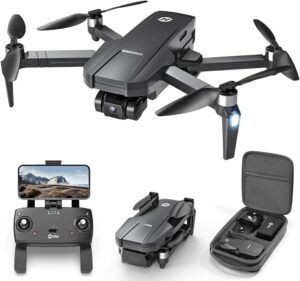
Holy Stone HS720R
1/3″ Sony CMOS · 4K/30fps · 3-axis mechanical gimbal + EIS ⭐ · 389g · 26-minute flight time · 2,950mAh battery · GPS + Return to Home · Follow Me / Waypoint / Point of Interest · 140° FOV · Foldable design · Includes carry case · ~$280–$360
⚖️ Registration Required
At 389g the Holy Stone HS720R exceeds the 249g FAA threshold and requires registration for use in the US — both recreational and commercial. TechRadar confirmed this in their review. The HS720R does not have a built-in Remote ID transmitter; Holy Stone offers a complimentary Remote ID module — contact Holy Stone directly to obtain it. Register at FAAdronezone.faa.gov before flying. Check local regulations if outside the US.
Best for: First-time drone buyers who want a 3-axis mechanical gimbal and GPS at an accessible price point under $300. The HS720R is Holy Stone’s first model to feature a mechanical gimbal — a meaningful upgrade over drones with only electronic stabilization — and it includes GPS, Return to Home, Follow Me, Waypoint Flight, and a carry case in the box. Not suitable for buyers who want to stay under the 249g registration threshold or who need obstacle avoidance.
The Holy Stone HS720R is a notable milestone for Holy Stone: it is the brand’s first model to feature a 3-axis mechanical gimbal, as confirmed by TechRadar and Space.com in their reviews. The gimbal works alongside Electronic Image Stabilization to produce smoother video than a fixed or electrically stabilized camera alone — particularly useful when the drone banks or pitches during flight maneuvers. The 1/3-inch Sony CMOS sensor shoots 4K at 30fps with a 140° wide-angle field of view. TechRadar tested the advertised 26-minute flight time and confirmed it as reliable in summer conditions, achieving just under 24 minutes before the auto Return to Home triggered.
Space.com confirmed the 2,950mAh battery and 26-minute advertised flight time, and noted that when battery reaches 30–40%, altitude and range are automatically limited to ensure the drone can return home — a sensible safety feature for beginners. GPS positioning provides hover stability and the Return to Home function, which is essential for first-time pilots. The Ophelia Fly app unlocks Follow Me mode (drone locks onto and follows a subject), Waypoint Flight (pre-planned autonomous routes), and Point of Interest (drone circles a specific subject). One important note raised by Half Chrome Drones: the HS720R is based on the MJX Bugs 18 Pro rebranded by Holy Stone — a common practice in this market segment. Holy Stone’s value-add is customer service, warranty support, and Amazon availability. There is no obstacle avoidance on the HS720R — pilots must maintain full manual awareness at all times.
✓ Pros
- 3-axis mechanical gimbal — Holy Stone’s first, produces smoother footage
- GPS + Return to Home — essential safety for beginners
- Follow Me, Waypoint Flight, Point of Interest modes
- Carry case included in the box
- 4K/30fps with 140° wide-angle FOV
- Good build quality for the price
- 26-minute flight time tested as reliable
- Accessible price under $360
✗ Cons
- 389g — requires FAA registration, above 249g threshold
- No obstacle avoidance — full manual awareness required
- 1/3″ sensor — noticeably weaker in low light vs 1/1.3″ or 1″ sensors
- 5-hour charging time via USB-C is very slow
- Occasional control lag at longer distances noted by reviewers
- Some GPS drift noted when hovering in place
- No built-in Remote ID — separate module required
💡 ClarityPick Verdict: The Holy Stone HS720R is the best beginner drone under $300 of 2026 for buyers who want a 3-axis mechanical gimbal, GPS, and intelligent flight modes without the price of a DJI. A solid first drone with reliable 26-minute flight time, Follow Me, and Waypoint Flight. Know the limitations: requires FAA registration, no obstacle avoidance, slow charging, and the 1/3-inch sensor has clear image quality limits versus larger sensors.
Check Current Price on Amazon →
Price changes daily — click to see today’s price
#5 Potensic Atom SE — Best Ultra-Budget Sub-250g Drone 2026
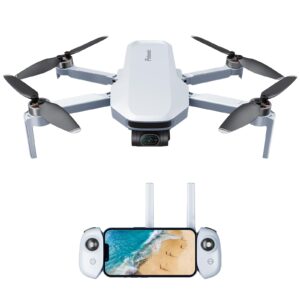
Potensic Atom SE
1/3″ Sony CMOS · 12MP stills · 4K/30fps · EIS ShakeVanish stabilization · Under 249g ⭐ · 31-minute flight time · GPS + GLONASS · 4km range · Follow Me / Circle / Waypoints · RAW (DNG) stills · 118° FOV · Pocket-sized folding design · ~$200–$250
Best for: Complete beginners who want a sub-249g GPS drone with 4K video, RAW photo capability, and 31-minute flight time at under $250 — without needing FAA registration for recreational use. The Potensic Atom SE is the only sub-249g option on this list below $300, making it the entry point for buyers who want to stay under the registration threshold at the lowest cost. No obstacle avoidance — requires manual pilot awareness at all times.
The Potensic Atom SE delivers a genuinely impressive specification for its price. Potensic’s official page confirms the key specs: under 249g, Sony 12MP CMOS sensor, 4K/30fps video, 12MP RAW (DNG) stills, 31-minute advertised flight time, GPS + GLONASS positioning, and a 4km control range. TechRadar’s review confirmed the actual tested weight as 245g including battery and microSD card — comfortably under the 249g threshold. Digital Camera World praised it as one of the best inexpensive beginner drones available, and Space.com confirmed the 31-minute advertised flight time, though testing in near-freezing temperatures achieved around 20 minutes — real-world flight time in temperate conditions will be closer to 25 minutes.
The Sony 12MP sensor shooting RAW (DNG) files is a meaningful capability at this price point — RAW files retain far more image information than JPEG and allow for significant exposure and colour correction in post-processing. The ShakeVanish EIS stabilization reduces camera shake during flight. One important limitation noted by TechRadar and Digital Camera World: the Atom SE uses Electronic Image Stabilization only, not a mechanical gimbal. This means that when the drone rolls into a crosswind, the horizon in the footage tilts rather than being compensated by a gimbal — an FPV-style roll effect that a mechanical gimbal would correct. Digital Camera World noted: “photographic sticklers will struggle to like the Potensic Atom SE not because of anything wrong with the drone but because they’ll never be happy without a gimbal camera.” For buyers who understand this limitation and are starting out, the Atom SE is exceptional value. For buyers who need a mechanical gimbal at this weight class, the Potensic Atom (not SE) adds a 3-axis gimbal at around $299.
✓ Pros
- Under 249g — no FAA registration for recreational use
- Most affordable sub-249g GPS drone on this list (~$200–$250)
- Sony 12MP sensor with RAW (DNG) stills — post-processing capable
- 4K/30fps video with EIS stabilization
- 31-minute advertised flight time
- GPS + GLONASS + ToF sensor for indoor/outdoor positioning
- 4km control range
- Pocket-sized folding design — fits in a jacket pocket
✗ Cons
- No mechanical gimbal — EIS only, horizon tilts in crosswind
- No obstacle avoidance — full manual awareness required
- Controls noted as sensitive and twitchy by TechRadar
- 1/3″ sensor — limited low-light performance
- Real-world flight time ~20–25 min in typical conditions
- No 10-bit color or log profile
- No follow-focus or advanced tracking like DJI’s ActiveTrack
💡 ClarityPick Verdict: The Potensic Atom SE is the best ultra-budget sub-249g drone of 2026. Under 249g, GPS, 4K/30fps, Sony sensor, RAW stills, and 31-minute flight time for under $250 — at a price point that makes it the most accessible entry into GPS drone flying on this list. The lack of a mechanical gimbal is the primary limitation — if you need a mechanical gimbal at sub-249g weight, consider the Potensic Atom (not SE) at around $299. For buyers who understand the EIS limitation, the Atom SE is outstanding value.
Check Current Price on Amazon →
Price changes daily — click to see today’s price
Drone Camera Buyer’s Guide 2026
🎯 Choose DJI Mini 4 Pro If…
- Staying under the 249g FAA registration threshold is important for your use case — recreational pilots who want to fly closer to people and built-up areas without registration will benefit most from the sub-249g category
- You want the most capable compact drone available in 2026 — omnidirectional obstacle sensing, 4K/60fps HDR, 10-bit color, and ActiveTrack 360° in a pocket-sized package make this the best single-purpose travel drone on the market
- You want true vertical shooting for social media content — the Mini 4 Pro’s rotating gimbal shoots native 9:16 portrait video without cropping
🎯 Choose DJI Air 3 If…
- You need a genuine telephoto lens — the 70mm 3x medium tele on its own 1/1.3-inch sensor shoots subjects at distance with the same optical quality as the wide camera, unlike digital zoom which crops and degrades image quality
- Maximum flight time is important — the 46-minute maximum (42 minutes hovering) is the longest on this list and significantly extends your shooting window per battery charge
- You are an enthusiast or semi-professional who shoots a wide variety of subjects including wildlife, sports, events, or architecture where telephoto reach and flight endurance matter
🎯 Choose Autel EVO Lite+ If…
- The largest possible sensor for the best low-light and dynamic range performance is your priority — the 1-inch CMOS outperforms the 1/1.3-inch sensors in both DJI options for still photography and landscape work in challenging lighting conditions
- You want manual aperture control — the variable f/2.8–f/11 aperture allows creative depth of field control and exposure management that no other drone on this list offers
- You prefer to operate outside DJI’s ecosystem — Autel drones have historically faced fewer geofencing restrictions in some regions, which matters for commercial operators and photographers working in complex airspace environments
🎯 Choose Holy Stone HS720R If…
- Budget is your primary constraint and you want a 3-axis mechanical gimbal, GPS, and Follow Me mode at the lowest price point for those features — the HS720R delivers all three under $360
- You want everything in the box — the kit includes a carry case, spare propellers, and screwdriver alongside the drone and controller, making it a complete package for a first-time buyer
- You are comfortable with the FAA registration requirement at 389g and want a reliable GPS drone with return-to-home safety for your first flights
🎯 Choose Potensic Atom SE If…
- Budget is tight and staying under the 249g FAA registration threshold matters — the Atom SE is the only sub-249g option on this list under $250, making it the most accessible entry point for GPS drone flying
- You want RAW photo capability to learn post-processing — the Sony sensor with DNG RAW output gives you the files needed to understand how exposure and colour correction work in editing software
- You understand the EIS-only limitation and accept that mechanical gimbal stabilization is not included at this price — if you need a mechanical gimbal at sub-249g, the Potensic Atom (not SE) is available at around $299
📋 Drone Buying Checklist 2026
- Check the weight and register if required: Any drone over 250g (0.55 lbs) must be registered with the FAA in the US for both recreational and commercial use. Registration costs $5 and lasts three years. Drones over 250g also need Remote ID compliance — check your specific model’s Remote ID status before flying. Always check current FAA rules at faa.gov/uas as regulations evolve
- Check local airspace before every flight: Download the FAA DroneZone app or B4UFLY app to check airspace restrictions at your intended flying location before you go. Restricted airspace around airports, national parks, government facilities, and temporary flight restrictions can change daily. Flying in restricted airspace carries significant fines
- Buy extra batteries: Real-world flight times are always shorter than advertised — typically 20–30% less in normal flying conditions. For a drone with a 26–34 minute advertised flight time, plan for 18–25 minutes of usable flight per battery. Two batteries at minimum is the practical standard for a meaningful flying session
- Understand what stabilization you’re getting: 3-axis mechanical gimbals physically compensate for drone movement and produce the smoothest video — DJI Mini 4 Pro, DJI Air 3, Holy Stone HS720R, and Autel EVO Lite+ all have mechanical gimbals. Electronic Image Stabilization (EIS) uses software to reduce shake and is good but not equivalent to a mechanical gimbal — Potensic Atom SE uses EIS only. If smooth video is critical, confirm your drone has a mechanical gimbal
- Match the sensor size to your expectations: The 1-inch sensor in the Autel EVO Lite+ will produce noticeably better low-light images than the 1/3-inch sensors in the Holy Stone HS720R and Potensic Atom SE. The 1/1.3-inch sensors in the DJI Mini 4 Pro and Air 3 sit in between — excellent for recreational and content creation use, but not at the absolute level of the 1-inch sensor for demanding photography work
Frequently Asked Questions
Do I need to register a drone with the FAA in 2026?
In the US, drones that weigh between 0.55 lbs (250g) and 55 lbs must be registered with the FAA for both recreational and commercial use — registration costs $5 and lasts three years. Drones under 250g (0.55 lbs) do not require registration for purely recreational use, though you must still fly within airspace rules and Remote ID rules may apply. Of the drones on this list: DJI Mini 4 Pro (with standard battery, under 249g) and Potensic Atom SE (under 249g) do not require registration for recreational use. DJI Air 3 (720g), Autel EVO Lite+ (835g), and Holy Stone HS720R (389g) all require registration. Always check current FAA rules at faa.gov/uas before flying as regulations change.
What is the best drone for beginners in 2026?
The best beginner drone depends on your budget. For the best beginner experience with the highest safety: the DJI Mini 4 Pro at ~$759+ is the top choice — omnidirectional obstacle sensing makes it significantly safer to learn on and the sub-249g weight avoids FAA registration for recreational use. For beginners on a tighter budget who still want GPS and a mechanical gimbal: the Holy Stone HS720R at ~$280–$360 includes GPS, Return to Home, and Follow Me mode. For the most affordable GPS drone under 249g: the Potensic Atom SE at ~$200–$250 is the best value entry point. Beginners should prioritise GPS (for Return to Home safety) and obstacle avoidance if budget allows — crash costs and repair time are significantly higher on drones without these features.
Is the DJI Mini 4 Pro worth buying in 2026?
Yes — the DJI Mini 4 Pro remains the best compact drone under 249g in 2026. No other sub-249g drone has matched its combination of omnidirectional obstacle sensing, 4K/60fps HDR with 10-bit color, 48MP RAW stills, and 20km transmission range. DJI released the DJI Mini 5 Pro alongside updates to its Air and Mavic lines, but the Mini 4 Pro’s spec set remains competitive and its price has become more accessible as the market has matured. It is the correct choice for anyone who wants the best under-249g drone available without stepping up to the heavier Air or Mavic series.
What is the difference between DJI Mini 4 Pro and DJI Air 3?
The DJI Mini 4 Pro and Air 3 share the same 1/1.3-inch CMOS sensor technology and both shoot 4K/60fps HDR with 10-bit color — their image quality from the wide-angle camera is comparable. The key differences are: the Air 3 adds a second 1/1.3-inch camera with a 70mm 3x telephoto lens, giving you genuine optical zoom at full quality; the Air 3 has a 46-minute maximum flight time versus the Mini 4 Pro’s 34 minutes (or 45 with Plus battery); the Air 3 weighs 720g versus the Mini 4 Pro’s under-249g, which triggers FAA registration requirements; and the Air 3 costs significantly more. If you want to stay under 249g, choose the Mini 4 Pro. If telephoto reach and longer flight time matter more than weight and cost, choose the Air 3.
Is the Autel EVO Lite+ better than DJI Air 3?
The Autel EVO Lite+ has a larger 1-inch CMOS sensor and a variable aperture (f/2.8–f/11) — advantages for photographers who want maximum image quality and manual exposure control in a single-camera drone. The DJI Air 3 has dual cameras (wide + telephoto), omnidirectional obstacle sensing versus the Lite+’s 3-way detection, 10-bit D-Log M color profiles versus the Lite+’s 8-bit A-Log only, and is CE-approved in Europe where the Lite+ falls into the restrictive A3 category. For still photography with manual exposure control and no EU flying requirements: the Lite+ has a genuine sensor advantage. For versatile aerial video with telephoto reach, superior obstacle avoidance, and EU compatibility: the Air 3 is the stronger overall package. Both require FAA registration in the US at their respective weights.
🏆 Final Verdict — 5 Best Drone Cameras 2026
Five drones for five different buyers — match the drone to your weight requirements, image quality goals, and budget.
Best Overall: DJI Mini 4 Pro — under 249g, omnidirectional sensing, 4K/60fps HDR, ActiveTrack 360°
~$759–$959
Best Dual-Camera: DJI Air 3 — dual 1/1.3″ sensors, 70mm telephoto, 46-min flight time, omnidirectional sensing
~$1,099–$1,599
Best Non-DJI Pro: Autel EVO Lite+ — 1″ CMOS, variable aperture, 5.4K video, 40-min flight, Moonlight Algorithm
~$799–$1,149
Best Beginner Under $300: Holy Stone HS720R — 3-axis gimbal, GPS, Follow Me, 4K/30fps, carry case included
~$280–$360
Best Ultra-Budget Sub-249g: Potensic Atom SE — under 249g, Sony sensor, RAW stills, GPS, 31-min flight time
~$200–$250
Affiliate Disclosure: As an Amazon Associate, we earn from qualifying purchases. This review contains affiliate links at no extra cost to you. Our recommendations are always independent and unbiased. Last Updated: May 2026